Swamp Cooler Installation Services in Nacogdoches, TX
Swamp Cooler Installation Kings provides swamp cooler installation, evaporative cooler replacement, and rooftop and ground-mounted cooler setup services in the Nacogdoches, TX area for both residential and commercial properties, including ductwork, water lines, and relief vents. Contact us now for a free estimate.
How Much Does Swamp Cooler Installation Cost in Nacogdoches, TX?
Swamp cooler installation in Nacogdoches, TX costs anywhere from $1,260 to $3,190 on average for a whole-house roof or ground-mounted cooler connected to existing ducts, with the unit included. The price depends on the cooler's size in CFM, where it mounts, whether ducts or a roof jack are new, the water and electrical runs, and whether an old cooler comes out first.
Do You Install Swamp Coolers at Homes and Businesses?
Yes, we install evaporative coolers on houses, mobile homes, shops, garages, warehouses, and other commercial buildings. Let us know the building type and roughly how many square feet you want cooled.
Do You Service My Area?
Yes, we cover the Nacogdoches, TX area. Send us the property address and we'll confirm.
Can You Replace My Old Swamp Cooler?
Yes, we disconnect the water and power, lift the old cooler off, check the roof jack or stand, and set the new unit level in the same spot when the opening fits.
Can You Remove My Old Cooler and Patch the Roof?
Yes, we take down the old cooler, haul it away, and close and flash the old roof opening if you're not reusing it. Removal usually adds $70 to $200, and roof patching is priced by what we find.
Can You Install a Swamp Cooler I Already Bought?
Yes, we install coolers that customers buy themselves. Send us the brand, model, and CFM rating so we can check that the roof jack, duct opening, and electrical supply match it.
Will a Swamp Cooler Work Where I Live?
Yes, if your summers are dry. Evaporative coolers work best in low-humidity climates and lose much of their effect in humid weather, including monsoon season. Tell us your area and we'll say honestly whether a cooler makes sense.
What Size Swamp Cooler Do I Need?
Coolers are sized by airflow in CFM, not tons. We multiply your floor area by the ceiling height and the air changes your climate needs, so a 2,000 square foot house often needs about 5,000 CFM or more.
How Soon Can You Install a Swamp Cooler?
Usually within a few days to a week, depending on the season. Installers book up fast once the first hot spell hits, so it helps to call in spring.
What Information Do You Need for a Swamp Cooler Quote?
We need the address, the square footage, whether you're replacing a cooler or adding one, and photos of the current unit or the spot where it will go. Mention whether the house has ducts and an attic we can reach.
Will I Need to Be Home During the Installation?
Yes, for part of it. We usually need inside access to the attic hatch, ceiling vents, and the thermostat or switch, but you don't need to watch the rooftop work.
Can I Have a Swamp Cooler Installed if I Rent My Home?
Yes, but the property owner has to approve it first, since we cut into the roof and connect to the plumbing and wiring.
Do I Need a Permit to Install a Swamp Cooler?
Yes, in some cities, especially for a new roof opening or new wiring. Permit fees typically run $50 to $300, and your local building department decides what's required. We'll tell you what's usual before we start.
Can I Get a Price Before the Work Begins?
Yes, we confirm the price before starting. If we find a rotted roof deck, a damaged duct, or old wiring that has to be fixed, we talk to you before doing any extra work.
How Long Does Swamp Cooler Installation Take?
Most rooftop replacements take one day. A window unit takes about an hour, and a retrofit with new ducts can take two or three days.
Can You Install a Swamp Cooler on My Roof?
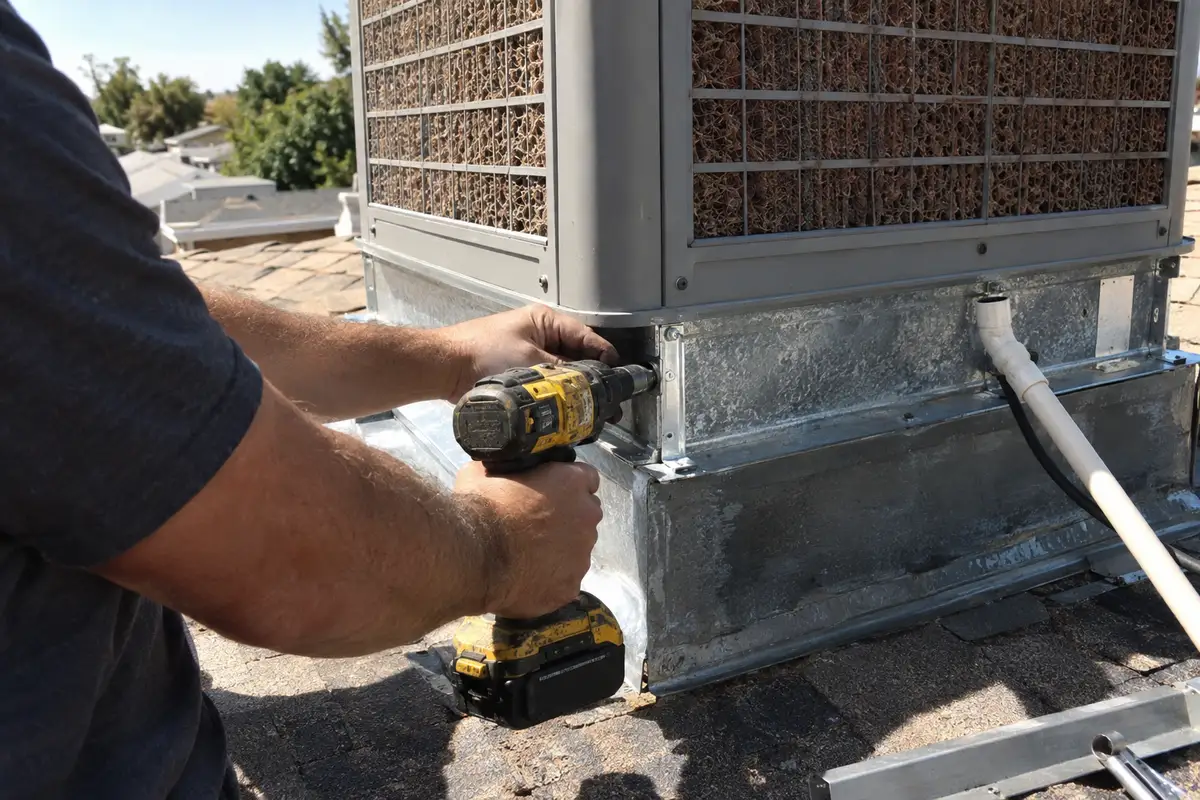
Yes, rooftop down-draft coolers are the most common residential setup. We set the cooler on an adjustable roof jack or leg stand over an opening between the trusses, level in every direction so it doesn't leak.
Can You Install a Ground-Mounted Swamp Cooler?
Yes, we set side-draft coolers on a pad or stand beside the house and duct them through the wall or into the attic. Ground units are easier to service and keep water off the roof.
Can You Install a Window Swamp Cooler?
Yes, we install window coolers with a support bracket, a weather seal, and a water line. They suit one room.
Which Is Better, a Down-Draft or Side-Draft Swamp Cooler?
Down-draft units blow straight into a roof opening and fit most homes with an attic duct. Side-draft units suit ground, wall, or low-roof setups. We recommend one after seeing where your ducts run.
Can You Convert a Down-Draft Cooler to Side-Draft?
Yes, in most cases. Residential roof units ship as down-draft, and converting one means moving the motor and blower venturi, which we do on the ground before the cooler is mounted.
Can You Install a Two-Stage or Indirect Evaporative Cooler?
Yes, we install two-stage and indirect units. They cost more but add less humidity indoors, which helps in areas that get muggy for part of the summer.
Can You Install a Swamp Cooler in a Garage or Workshop?
Yes, garages and shops are a good fit because a big door or window gives the air somewhere to go. Tell us the size of the space and whether it has power and water nearby.
Can You Install Evaporative Coolers in a Warehouse?
Yes, we install larger commercial units for warehouses, shops, and barns. Tell us the floor area, ceiling height, and where exhaust air can leave, and we'll size the units from that.
Can a Swamp Cooler Use My Existing Furnace or AC Ducts?
Yes, if the ducts are big enough. Coolers move far more air than a furnace or central air, so most need an 18x18 or 20x20 inch main duct, and shared ducts need dampers to close off the cooler. We check your ductwork before quoting.
Can You Install a Swamp Cooler in a House With No Ducts?
Yes, we often run one duct from the cooler down to a single four-way diffuser in a central hallway. Larger homes with several bedrooms usually need branch ducts to each area.
Do I Need to Open Windows When the Swamp Cooler Runs?
Yes, the cooled air needs a way out. We plan on about 2 square feet of open window or relief vent for every 1,000 CFM, or the house feels damp and cooling drops off.
Do You Install Up-Ducts or Ceiling Relief Vents?
Yes, we install barometric up-ducts that let cooled air escape into a vented attic, so you don't have to leave windows open. They close on their own when the cooler shuts off.
Can My Roof Hold a Swamp Cooler?
Yes, most roofs can. A filled residential cooler often weighs 135 to 170 pounds or more, so we set the jack across the trusses and never cut a truss to fit the duct.
Will a Rooftop Swamp Cooler Make My Roof Leak?
No, not when it's installed right. We flash the roof jack, set the cooler dead level, and run the overflow away from the roof. Leaks usually come from tilted units or worn flashing.
Do You Run the Water Line and Electrical?
Yes, a full install includes a cold water line to the float valve with a shutoff you can reach, and power to the motor and pump. We wire it to local electrical code.
Do You Install a Bleed-Off Line?
Yes, if your water is hard. A bleed-off line drains some water to slow mineral buildup but adds 10% to 50% to water use, so we often suggest a dump pump that flushes the pan every 8 to 12 hours.
Can You Install a Thermostat for My Swamp Cooler?
Yes, we install wall switches, cooler thermostats, and smart controls. A cooler thermostat typically adds $145 to $230.
What Cooler Pads Should I Get?
Aspen pads cost about $25 to $50 a set but need replacing every year. Rigid cellulose pads cost more and last about 3 to 5 years. We fit whichever type your cooler is built for.
What Should I Do Before You Arrive?
Clear a path to the attic hatch and the hallway ceiling vent, and move cars so we can reach the side of the house with a ladder. Point out where the water shutoff and breaker panel are.
Is a Swamp Cooler Cheaper Than Central Air?
Yes, a swamp cooler usually costs about half as much to install as central air and uses about a quarter of the electricity.
How Much Water Will a Swamp Cooler Use?
Small coolers use under a gallon an hour and large whole-house units can use over 10 gallons an hour on hot, dry days.
Can I Install a Swamp Cooler Myself?
Yes, a portable or small window unit is a fair DIY job. Rooftop and ducted coolers mean cutting the roof, lifting a heavy unit, and running water and power, which is the work we handle.
Will You Show Me How to Winterize My Swamp Cooler?
Yes, we show you where to shut off the water, how to drain the pan, and how to close the ceiling dampers. A cover keeps dust and cold air out over the winter.
